
Reading
Short everyday texts and academic passages. Your performance in module one sets the difficulty of module two.
Hit your target band on the new 1–6 scale and secure admission to universities in the USA, Canada, the UK, Australia and beyond — with Dr Ahmed's TOEFL coaching built for the new adaptive format.
The Test of English as a Foreign Language (TOEFL iBT) is an English proficiency exam run by ETS, built to measure how well you use English in university settings — reading lecture material, following academic talks, writing for class and speaking in campus situations.
Since 21 January 2026, the TOEFL iBT has a new format: a shorter test (roughly 90 minutes), adaptive Reading and Listening, new task types, and scores reported on a 1–6 band scale aligned with CEFR. For a two-year transition, score reports also show a comparable 0–120 total.
The new TOEFL iBT mixes academic content with everyday campus English. Dr Ahmed's coaching trains you on every new task type — and on how the adaptive modules work.
Short everyday texts and academic passages. Your performance in module one sets the difficulty of module two.
Short campus exchanges through to academic talks — each heard once, with questions after.
From building accurate sentences to writing a practical email and contributing to an online class discussion.
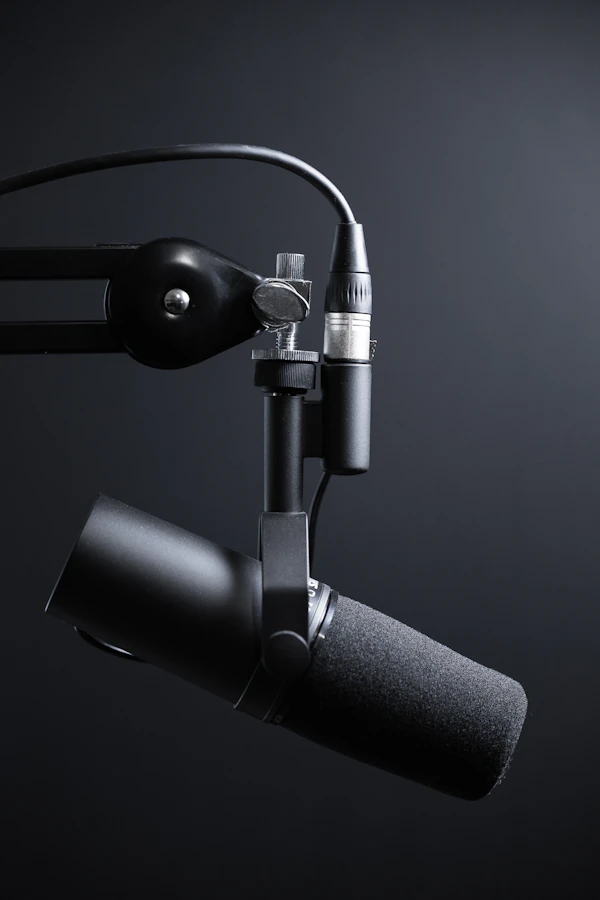
Short, fast-paced tasks testing pronunciation, fluency and how naturally you answer interview-style questions.
The 2026 TOEFL rewards speed, accuracy and adaptability. Most students lose marks not on hard questions, but on the new fast tasks — Complete the Words, Build a Sentence and Listen and Repeat. Dr Ahmed's coaching drills these until they become automatic.
Each university sets its own TOEFL requirement — and many also set minimum section scores. During the transition period, many still quote the old 0–120 scale. Dr Ahmed helps you translate your target into the new 1–6 bands.
Leading research universities and competitive graduate programmes typically ask for around 100 or more on the old scale, often with minimum section scores — especially in Speaking and Writing.
The majority of universities in the USA, Canada, the UK, Australia and Europe set their requirement in the 80–100 range. Always check your programme's exact section minimums.
Pathway, foundation and some community-college routes accept lower scores, often with English support built into the first term.
Scholarship schemes and teaching-assistant positions often set higher Speaking requirements than general admission. We plan your target around the strictest requirement you face.
How the new 1–6 band scale compares with the old 0–120 total and the CEFR levels universities use.
| Band | Old 0–120 | CEFR | Top Unis | Most Unis |
|---|---|---|---|---|
| 6.0 | 114–120 | C2 | ✓ | ✓ |
| 5.5 | 107–113 | C1 | ✓ | ✓ |
| 5.0 | 95–106 | C1 | ⚠ Often | ✓ |
| 4.5 | 86–94 | B2 | ✗ | ✓ |
| 4.0 | 72–85 | B2 | ✗ | ⚠ Some |
| 3.5 | 58–71 | B1 | ✗ | ⚠ Pathway |
| ≤ 3.0 | 0–57 | B1 & below | ✗ | ✗ |
⚠ Comparisons are approximate and based on ETS's published concordance. Requirements vary by university and programme — always confirm on the official admissions page.
TOEFL is the most widely accepted English test for university admission in North America and is recognised by institutions worldwide. Dr Ahmed coaches to the exact requirement of your chosen universities.
TOEFL's home market — accepted by virtually every US college and university for undergraduate and graduate admission.
Undergrad · Grad · PhDWidely accepted by Canadian universities and colleges for degree and diploma admission.
Universities · CollegesAccepted by many UK universities for direct admission — check whether your university and visa route accept it.
University AdmissionRecognised by universities across Australia and New Zealand for undergraduate and postgraduate study.
Undergrad · PostgradEnglish-taught bachelor's and master's programmes in Germany, the Netherlands, Ireland, France and beyond.
English-Taught ProgrammesScholarship applications and English-taught programmes in Singapore, South Korea, Japan and other Asian hubs.
Scholarships · ExchangeNot sure which band you're at on the new 1–6 scale? Submit a free mock response and Dr Ahmed's team will give you a detailed, human breakdown — completely free, no obligation.
Takes less than 2 minutes · Feedback within 24 hours
Request My Free Mock AnalysisFive clear steps — from your free first call to walking into the TOEFL test knowing exactly how each task is scored.
15 minutes with Dr Ahmed to map your target universities, required bands and application deadlines.
A free diagnostic across all four sections benchmarks your current band on the new 1–6 scale.
A plan built around your weak sections, your schedule and your test date — not a one-size-fits-all course.
Speaking interviews, writing feedback, adaptive reading drills and listening practice — 6 days/week.
Send your scores to your chosen universities. Dr Ahmed guides you on score reporting and next steps.
What makes Dr Ahmed a trusted TOEFL coach for students applying to universities across 20+ countries.
Many prep materials still teach the old TOEFL. Dr Ahmed's coaching is designed around the current test — adaptive modules, the new short tasks and the 1–6 band scale — so every practice hour targets what you'll actually see on test day.
Chat With Us on WhatsAppSpeaking and Writing are where section minimums are usually missed. Dr Ahmed and the team give detailed feedback on every recorded interview and every written response — pronunciation, fluency, organisation and accuracy — so you know exactly what to fix next.
Chat With Us on WhatsAppStudents juggle classes, jobs and application deadlines. Dr Ahmed's flexible scheduling — including evening, weekend and early morning sessions — means you can prepare without putting everything else on hold. WhatsApp support is available 24/7 between sessions.
Our coaching team includes writing specialists, speaking coaches and academic English experts — all dedicated to getting you to your target band.
Students who reached their target TOEFL band with Dr Ahmed — and are now studying at universities around the world.